-->

Bringing the Universe to Classrooms
and Homes Around the World!

Showing posts with label celestial objects. Show all posts

Sunday, January 17, 2016

Observing Comet Catalina

The cold and clear mornings we have had recently provided a few opportunities to get some good observations of Comet Catalina C/2013 US10. After reading about the many comets that were visible through small telescopes and binoculars, on the morning of January 5, 2016, at 5:15 am, I thought I would take a shot at locating Comet Catalina with my 9x63 binoculars. 

Using the comet finder chart provided online by Sky and Telescope magazine, the comet was shown to be located a few degrees north of Arcturus, the brightest star in the constellation of Boötes (Herdsman or Plowman). As I made my first attempt to locate the "dirty snowball" through my binoculars, I almost immediately spotted a condensed "fuzzy" object very close to the area the comet should be. I wasn't convinced this was the comet as it resembled a globular cluster. From my experiences of deep-sky observing, I was convinced it was M3, a bright globular cluster located in the constellation of Canes Venatici, the hunting dogs of Boötes the Herdsman, very close to the border of Boötes. I then slewed my binoculars a few degrees to the southeast and there it was! The comet appeared as a much fainter patch of condensed light. As twilight matured, the sky became brighter and the comet became harder to see. I leaned back against my SUV in the driveway and took in the amazing view of the planets lined up throughout the Zodiac. There was Jupiter to the west, Mars to the east, Venus, the waning crescent Moon, and last Saturn in the glow of the sunlight.

Comet Catalina - Imaged by Insight Observatory
Comet Catalina - Imaged by Insight Observatory.

After spotting Comet Catalina on that frigid morning, I was inspired to get a closer look at it with a 10" Dobsonian reflector telescope. However, the weather didn't cooperate the next day, so I waited one more day. Fortunately, the weather did provide another opportunity to observe the comet on the morning of January 7, 2016. The comet moved throughout the constellation within the few days since the first time I spotted it. The object was pretty much the same magnitude (brightness) as the previous time I viewed it. However, this time, I could resolve the nucleus enveloped in a diffused nebulous "cloud" due to the higher magnification of the telescope.

After studying the comet with the telescope that morning, the weather on the Cape was non-cooperative for close to a week afterward. However, surprisingly this past Friday, morning, January 15, 2016, around 5:30 am, the sky was perfectly clear. I went out on the front porch with my binoculars to see if I could locate it without any finder charts. I knew it was supposed to be near the handle of the Big Dipper from seeing images taken by others the previous days. I started scanning the area of the handle and spotted the comet again immediately. It seemed to have brightened a bit from the last time I saw it. The comet was very close to the last star in the handle of the Big Dipper named Alkaid. The bright star and Catalina were in the same field of view through my binoculars. It was quite a sight!

Comet Catalina - Imaged by Raffaelle Esposito
Comet Catalina - Imaged by Raffaelle Esposito.

Inspired by this view of the comet, I then went to my computer and logged into the iTelescope remote robotic telescope network (utilized by Insight Observatory) and connected to their telescope with a one-shot color CCD camera connected to it. The telescopes were very busy that morning, however, T3 became available and I jumped on and imaged the comet for 5 minutes as pictured in this post. Later during the day on Friday, I came across a great image of the comet captured by Raffaele Esposito on January 14, 2016 (pictured left) with the bright star Alkaid and the spiral galaxy NGC 5448 behind the comet's tail.

Some Interesting Facts About Comet Catalina C/2013 US10:

C/2013 US10 is an Oort cloud comet discovered on 31 October 2013 by the Catalina Sky Survey at an apparent magnitude of 19 using a 0.68-meter Schmidt–Cassegrain telescope. As of September 2015, the comet became apparent magnitude 6.

The comet reached its perihelion (its closest point to the sun) at a distance of 76 million miles (122 million kilometers) on November 15 and as it slingshotted past the sun, Catalina reached a velocity of 103,000 miles per hour (166,000 kilometers per hour), which is almost three times the speed of NASA’s New Horizons spacecraft. The velocity means that the comet is on an escape trajectory from the solar system and will never return.

The comet passes closest to Earth at 0.72 a.u. on January 12th, then buzzes Mizar in the Big Dipper's handle on January 14–15, hurrying along at the rate of 2° per day or 5′ an hour — fast enough to easily detect motion in 30 minutes or less. After mid-month, it's expected to fade quickly.
Read More

Tuesday, July 21, 2015

An Astrobiologist's Brief View on Life

What are life-forms on Earth, made of? What about celestial objects, like other planets, comets, asteroids, and stars – what are they made of?

As can be shown, by an instrument known as a mass spectrometer, they all share the same, fundamental chemistry of Earth and its companion planets. All of these are made from the common chemicals, minerals, and metals that are found in and on the Earth.

MACSJ0717.5+3745 Galaxy Cluster Imaged by the Hubble Space Telescope.

Living organisms - animal, bacterial, fungal, and floral, are composed of various combinations of these elements, which express themselves in varying molecular arrangements and can be found in the Periodic Table of the Elements. The myriad of potential arrangements accounts for the diversity of life on this planet.

Beyond hydrogen, all of this chemistry - entry but if it - was forged in the interiors of stars, namely, a type of star called a supernova.

A supernova is a catastrophic, stellar event, in which, the progenitor star collapses under its own weight, then, rebounds, blowing itself to smithereens - much of it, reduced to atomic nuclei. Due to a process called stellar nucleosynthesis (fusion reactions that take place at a star’s core, at extreme temperatures), at a certain temperature all of those elements are converted, one from the other, from the available hydrogen fuel; hydrogen converted to helium; helium to lithium; lithium to beryllium, and on to the heavy metals.

The galaxies (galaxies are, simply, large collections of stars, bound by a common gravitational field) and all of the planets of our solar system, its comets, asteroids, and our star, the Sun, and the exoplanets orbiting other stars (more than 2,000 have been confirmed by NASA/JPL and more than 350 are Earth-like) - all of these - including our very selves - are composed of these various molecular arrangements of those elements. Living things are not made up of some unique, special or mysterious substance. Cornell professor of astronomy and exobiologist, Carl Sagan, once made this accurate statement: “We are all star-stuff.”

Every niche, on this planet, is aggressively occupied by some form of life; no territory is wasted. Earth and its supporting star, the Sun, are rather average places; there is nothing outstanding about our Solar system – the sun and its planets - and, possibly, even ourselves, and yet, life arose here just the same. So, what are the chances of life arising elsewhere, in our or other galaxies in the universe? It seems to me that life, will, ultimately prove to be the rule and not the exception.

Dale Alan Bryant
Senior Contributing Science Writer
Read More

Saturday, May 31, 2014

An Introduction to Astronomy and Stargazing

Mankind has always been fascinated with the heavens since time immemorial. Stargazing was not just a pastime on lovely nights. People navigated the seas and crossed continents with stars as their guide. They even thought the constellations charted their fates. But that was before the giant leap from astrology to astronomy. 

Stargazer
Stargazer

Astronomy literally means 'law of the stars,' from the Greek words 'Astron' (star) and 'nomos' (law), but astronomers would rather accurately define it as the 'scientific study of celestial objects (such as stars, planets, comets, and galaxies) and phenomena that originate outside the Earth's atmosphere (such as the cosmic background radiation), and is concerned with the evolution, physics, chemistry, meteorology, and motion of celestial objects, as well as the formation and development of the universe.'

However long-winded Wikipedia's definition seems, don't let it tick you off. There's more to astronomy than theories, calculations, and tedious observations. One thing's certain, though: astronomy is not for jocks.

However, don't get the impression that you need a PhD in astrophysics to get suitably curious with the fascinating display of stars on a clear moonless night. Amateur astronomers have made many important astronomical discoveries. In fact, astronomical societies encourage the involvement of amateur observers, the sky being too wide for just professional astronomers to cover.

By Jim O'Neil

Article Source:  An Introduction to Astronomy and Stargazing
Read More

Monday, May 26, 2014

Astronomy for Beginners

Many people are interested in what lies beyond the Earth and the moon. Humans by nature are curious, and, therefore, it is only natural that people want to learn and understand more and more about stars, planets, comets, and galaxies. Also, popular sci-fi television serials and movies have further fueled the yearning to look beyond the Earth. 

However, if you are a beginner in astronomy, there is more to this subject than just identifying the stars lighting up the night sky. It also involves understanding how different celestial bodies move and how they influence other celestial bodies. Recently, it has been concluded that astronomy is very similar to astrophysics.


Stargazer's gathered at a Star Party
Stargazers gathered at a Star Party

Astronomy consists of two branches, namely observational astronomy and theoretical astronomy. Observational astronomy deals with gathering and analyzing data, while theoretical astronomy deals with making models that help to explain the different astronomical objects and phenomena. The results from both branches are used in order to explain all the observations made and to confirm the results of the theories.

Many amateur astronomers have left their mark on this field of science. They have been instrumental in making amazing discoveries. In fact, astronomy is one of the fields of science where amateurs and beginners are allowed to play active roles. So, if you want to cultivate this hobby, you are not alone. There are many clubs for amateur astronomers, and the members of these clubs are very serious about observing the positions of various celestial objects.

As a beginner in astronomy, you will need a telescope to help you identify the different celestial bodies in the night sky. Conduct research on the different types of telescopes and buy one that suits your needs and budget. You can also check out various online forums for amateurs and beginners, where you can get useful tips on making the right selection on a telescope. Also, invest money in a good book that will help you identify the different stars and celestial objects.

Start out slowly, and once you gain confidence and knowledge, you can graduate to mapping the movements of the different celestial objects. Also, during the course of your observations, you will see many nebulae and star clusters that are not only beautiful to observe, but also amazing. The sheer size of the universe is mind-boggling.

The world of astronomy can open the doorway to the universe. You can learn about the different planets, stars, galaxies, comets, black holes, nebulae, and more as you dig deeper into this subject.

Kum Martin

Read More

Thursday, March 13, 2014

Beginner Books

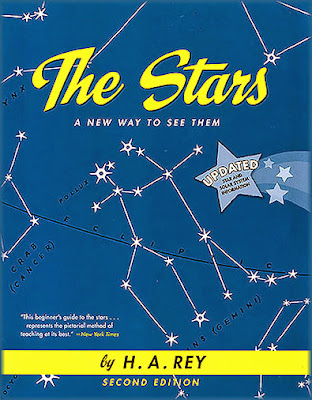
Looking at all these great images taken from remote robotic telescopes that grace our website and you might be thinking: these are certainly nice to look at, but how can I learn for myself where these objects are located in the night sky? Maybe you just want to learn the patterns of the constellations, or desire a more in-depth understanding of celestial mechanics? Well for adults and kids alike I would go no further for a first astronomy book than H.A. Rey's "The Stars, A New Way to See Them".

The Stars, A New Way to See Them
The Stars: A New Way to See Them

I myself read this as a young astronomy enthusiast in my pre-teen years and I recall how much I enjoyed reading it. Don't be fooled by your initial impressions if you check it out on Amazon: although lacking any photographs and possessing whimsical drawings by the same creator of Curious George, it is exactly these qualities that I find endearing and inspiring about the book. Highly recommended!
Read More

Saturday, March 8, 2014

The Real Joy of Astronomy - Observing

Even though we now have access to remote telescopes in various locations in the world where we have the ability to capture starlight and store it on our personal computers, there is also a way of enjoying astronomy as I did throughout the years and still do today. It is very exciting and rewarding to capture images of galaxies and nebulae, however, I still enjoy simply looking through a telescope and looking at astronomical objects visually. For example, while I'm logged into a remote telescope from my home office, I will have the 10" Dobsonian reflecting telescope set up in the front yard.

Clark University student Stephanie Fussell and I  visually observing galaxies for her astronomy class project - "Classifying Galaxy Types"
Clark University student Stephanie Fussell and I  
visually observing galaxies for her astronomy 
class project - "Classifying Galaxy Types"

As I am imaging objects in New Mexico, perhaps I will be enjoying a good view of M81, the spiral galaxy in Ursa Major, from my home. Sketching astronomical objects can be just as beneficial as imaging them. Our eyes can see details in astronomical objects visually through a telescope differently from how an image can.

I would like to share part of an article I wrote back in 1987 when I was Secretary of the Cape Cod Astronomical Society for its monthly newsletter. It is titled "The Real Joy of Astronomy - Observing".

Interest in the night sky came about when man first looked up to notice a strange phenomenon. This was called "Starlight". Astronomy is one of the oldest sciences known. It was curiosity, wonder, observation, and thought throughout the centuries that brought us to the current understanding of the universe. It was with the most valuable instrument that humans started to learn the properties of heavenly bodies... The unaided eye.


Observing is really what amateur astronomy is all about. I can recall the exact day I became hooked on astronomy. It was a warm spring back in 1975 that allowed my best friend and me to ride our bikes after dinner until the sunset brought on the twilight. There was one particular night that detoured our attention from the earth and put it into the sky. Both of us were pedaling as fast as we could to beat the darkness that was quickly falling upon us, to get home in time for dinner. As we turned down the last road before reaching our houses, suddenly there was a swift burst of light that caught the corner of my eye. My sense of curiosity forced me to stop instantly. When I took a good look at the spot where I saw the light, I noticed that the light was no longer there. The only thing that was there was a newly constructed house. My first and only thought was that it had to be a light left on in the house. Not being convinced, I slowly backed up, and there it was... the bright light. To my astonishment, it wasn't a light bulb at all. In fact, it was the waxing gibbous moon reflecting off the garage window.


Sears and Roebuck Refractor and Celestron SCT Telescopes
Sears and Roebuck Refractor and Celestron SCT Telescopes

I had received a small refracting telescope made and sold by Sears Roebuck for Christmas the previous year. I was always looking for an excuse to get it out and use it, and this was it! After pointing out the light source to my friend, Scott, I shared my idea of getting out the telescope and looking at the moon with it. Scott and I biked to my house as fast as we could with excitement and anticipation. After carrying the small telescope out to the front yard, it was then my lifelong passion for astronomy began! As I pointed the telescope at the moon and focused on the eyepiece, I couldn't believe my eyes. "Whoa!! You have to see this!" I shouted. As my friend Scott peeks, Scott yelled: "Look at all of the mountains!" It was a simple view of the moon that started a lifelong journey through the universe.

It was the visual observation that maintained a strong interest in astronomy. In 1976, my family and I relocated to Cape Cod, MA. It was there that I met Muir Evenden, whose family had just moved into my development from Colorado. It was amazing that we discovered we both shared the same interest. As time went on, we both advanced our knowledge of astronomy in our own ways. While Muir used to read numerous books on the subject, I would enjoy viewing documentaries. However, there was one thing we always shared equally... Observing! Muir had his Celestron 8" SCT, and I eventually acquired an Astroscan 4.45" wide-field reflector.

M57 - "Ring Nebula" in Lyra Image by Emily & Allie - PCIS

It was Muir who showed me all for the first time through his C8,  M31 - The "Andromeda Galaxy", M57 - The "Ring Nebula", and M13 - The "Great Globular Cluster " in Hercules. In exchange, I recall introducing Muir to M27 - The Dumbbell Nebula. I recently asked Muir what he gets from observing... "When I find a Deep-Sky object for the first time, I feel a great deal of wonder, excitement, and a bit of relief as if it were a big accomplishment. Observing, to me, is an adventure."

It has been 27 years since I wrote this article for the CCAS Newsletter. It brought back a lot of fond memories of my observing adventures while transcribing to this blog post. 


My point in posting this old article is to convey how visual observing can be just as enjoyable and productive as gathering imaging from a remote robotic telescope. Both practices go hand in hand.
Read More

Saturday, July 13, 2013

Blake Planetarium Receives Grant from itelescope.net

With a generous research grant awarded from iTelescope.net, a research project utilizing remote robotic telescopes for astronomy education called "Discovering our Milky Way Galaxy" will be a collaboration between the W. Russell Blake Planetarium, Insight Observatory, iTelescope.net and a group of students in grades 6-8. The planetarium will place a large printout of the Milky Way Galaxy, the way we see it from Earth, on the outside wall of the planetarium. The printout of the Milky Way will cover the view from both hemispheres. The students will be paired in groups of two and each group will be assigned a deep-sky object in or near the visible arm of the visible Milky Way. 

Northern Arm of Milky Way Galaxy imaged from iTelescope.net's New Mexico Skies location
Northern Arm of Milky Way Galaxy imaged from iTelescope.net's New Mexico Skies location

They will be in charge of imaging this object and writing a paragraph about it. When the images are returned, Michael Petrasko and Muir Evenden, Co-Project Directors from Insight Observatory will assist them with processing the images. The final pictures of the students' deep-sky objects will be placed along with the image of the Milky Way on the outside of the planetarium for all of the school and visitors to see and learn from.

The research project is slated to take place in October 2013. Planetarium Instructor, Monica Ares, will have the students come to the planetarium for an overview of the project and to look at the Milky Way on the dome. They will pair up and use iPads to fill out a form through Insight Observatory's website with their image request, exposure time, and telescope location. The form will also require a paragraph about the object. The students will return a week later to process their images in the computer lab. The photos will then be printed and overlaid on the image of the Milky Way along the outside of the planetarium.

The goal of the project is for students and teachers to understand not only what lies beyond our own night sky but also how we use the clues of distant objects to help us understand our own galaxy. Since we cannot take a picture of our entire Milky Way galaxy, we can study the images we capture of distant galaxies, both edge-on, and front-facing to better understand the part of the Milky Way that we can see in our sky. We can also study nebulae both within our galaxy and those that we see in distant galaxies to help us understand the life cycle of our stars and our ever-changing universe. We hope to create a permanent display of both the Galaxy Project and the Milky Way Project using digital posters on the outside of the planetarium.
Read More

Saturday, May 18, 2013

The Galaxy Project - What Lies Beyond Our Stars

Ms. Campbell's 6th-grade class at Plymouth Community Intermediate School in Plymouth, Massachusetts, was part of an exciting collaboration with the W. Russell Blake Planetarium and the Insight Observatory to image objects beyond the visible stars in our night sky. The students were given access to high-powered remote robotic telescopes for astronomy education located in New Mexico and Spain, facilitated by Insight Observatory. Each group was asked to image an item in deep space found near the patch of sky containing the constellations of Ursa Major, Leo, Coma Berenices, Canes Venatici, and Virgo.

Display of Galaxies Imaged by PCIS Students

The images that the students took of galaxies, a globular cluster, and a planetary nebula are breathtaking!  A large printout of the night sky, along with the students' images, is on display near the entrance of the planetarium. This hands-on experience not only taught the students a great deal about remote imaging with a telescope, but it also enabled them to grasp the profoundness of the images they captured.

Special thanks to Monica Ares, Planetarium Program Instructor, Michael Petrasko, Insight Observatory Project Developer, and Kellianne Campbell, 6th Grade Teacher at PCIS. Together, they designed this amazing opportunity for our students that they hope will grow in the years to come. Below are a few of the images the students acquired by using a 17" telescope remotely in Mayhill, New Mexico, with all image exposure times at 5 minutes. You can view all of the images the students acquired on the Insight Observatory's Image Gallery page.

M51 - Image by Mark R. & Peter H.

The Whirlpool Galaxy (also known as NGC 5194) is an interacting grand-design spiral galaxy in the constellation Canes Venatici. Recently, it is estimated to be 15 and 35 million light-years from our own Milky Way Galaxy. The galaxy and its companion (NGC 5195) are easily observed by amateur astronomers, and the two galaxies may even be seen with binoculars under dark skies and good seeing conditions. The Whirlpool Galaxy is also a popular target for professional astronomers, who study it to further understand galaxy structure (particularly structure associated with the spiral arms) and galaxy interactions.  

M97 - Image by Bianca T. & Cassidy B.

The Owl Nebula (also known as Messier 97, NGC 3587) is a planetary nebula in the constellation Ursa Major. It was discovered by Pierre Méchain in 1781. M97 is regarded as one of the more complex of the planetaries. The 16th magnitude central star has about 0.7 solar mass, and the nebula itself has about 0.15 solar mass. The nebula formed roughly 6,000 years ago. The nebula gets its name from the appearance of owl-like "eyes" when viewed through a large 200mm telescope under dark sky conditions with the aid of a so-called "nebula filter." The eyes are also (albeit not so easily) visible in photographs of the nebula.

NGC 4565 - Image by Olivia F. & Nachelle S.

NGC 4565 (also known as the Needle Galaxy or Caldwell 38) is an edge-on spiral galaxy about 30 to 50 million light-years away in the constellation Coma Berenices. The 10th magnitude galaxy sits perpendicular to our own Milky Way galaxy and is almost directly above the North Galactic Pole (in the same way Polaris is located above the North Pole). It is known as the Needle Galaxy for its narrow profile. First spotted in 1785 by Sir William Herschel (1738–1822), this is one of the most famous examples of an edge-on spiral galaxy. "Visible through a small telescope, some sky enthusiasts consider NGC 4565 to be a prominent celestial masterpiece Messier missed."
Read More

Saturday, April 27, 2013

One Shot Color of Carina Nebula

The southern hemisphere is full of "deep-sky wonders" as much as the northern hemisphere. Having access to remote robotic telescopes in locations such as New South Wales, Australia, allows us, northern hemisphere observers, to image and research a whole new frontier. Here is an image of NGC 3372, The "Carina Nebula" captured by Michael Petrasko on the evening of April 26, 2013 (local time NSW). This image was taken with a full moon in the sky at the time. It's clearly evident that there is no "washout" from the light of the moon whatsoever.

NGC 3372 - Carina Nebula imaged by Michael Petrasko

The Carina Nebula (also known as the Great Nebula in Carina, the Eta Carina Nebula, or NGC 3372, as well as "Grand Nebula") is a large bright nebula that surrounds several open clusters of stars. Eta Carinae and HD 93129A, two of the most massive and luminous stars in our Milky Way galaxy, are among them. The nebula lies at an estimated distance between 6,500 and 10,000 light-years from Earth. It appears in the constellation of Carina and is located in the Carina–Sagittarius Arm.

The Carina Nebula is one of the largest diffuse nebulae in our skies. Although it is some four times as large and even brighter than the famous Orion Nebula, the Carina Nebula is much less well known, due to its location far in the Southern Hemisphere. It was discovered by Nicolas Louis de Lacaille in 1751–52 from the Cape of Good Hope.

The image is a 15-minute exposure taken with an SBIG ST2000XMC One-Shot Color CCD camera through a Takahashi SKY90 3" (90mm) Apochromatic Refractor (pictured left) provided by iTelescope.net. Processing was done with SBIG CCDOps software and Adobe Photoshop CS6. 3x5 images were stacked with 3 synthetic luminance images created from each color image for noise reduction.

A one-shot color CCD camera can provide interesting images (if processed properly with synthetic luminance images) just as well, if not better, than high-end monochrome CCD cameras that use Red, Green, and Blue color filters.
Read More

Monday, March 25, 2013

The Great Globular Cluster in Hercules on a Moonlit Morning

After experimenting with iTelescope.net's remote robotic telescopes for astronomy education, imaging galaxies, and galaxy clusters, I figured it was now a good time to target another type of deep-sky object. First thing this morning around 3:00am, MDT, Telescope T-21 (Planewave 17" f/4.5 CDK) was available for imaging at New Mexico Skies. The moon's phase was near full in the western part of the sky and Messier 13 (M13), the Great Globular Cluster in Hercules was becoming high in the eastern part of the sky. This was my first attempt at imaging a deep-sky object when the moon was so bright using these telescopes. 

Image of M13 - Globular Cluster in Hercules - 300 Second Exposure
M13 - Globular Cluster in Hercules - 300-Second Exposure

After making a 5-minute exposure with only a luminance filter, the result is what you see to the left. I used the FITS Liberator and Adobe Photoshop CS6 for post-processing. I converted the FITS-processed grayscale image to RGB in Photoshop and added a blueish hue to the image for effect.

I find it absolutely amazing that when there is nearly a full moon in the night sky, observers are still able to take images of deep-sky objects with no interference from the moonlight. As I referred to the "All-Sky Camera" at New Mexico Skies to check the sky conditions before imaging, I could barely make out only a few of the brightest stars accompanied by an overexposed view of the moon. Also, because of today's technology with advanced CCD Cameras and precision mounts that track the sky so accurately, it only takes about 5 minutes to get an image like the one above.

Messier 13 (M13), also designated NGC 6205 and sometimes called the Great Globular Cluster in Hercules or the Hercules Globular Cluster, is a globular cluster of about 300,000 stars in the constellation of Hercules.M13 is about 145 light-years in diameter, and it is composed of several hundred thousand stars, the brightest of which is the variable star V11 with an apparent magnitude of 11.95. M13 is 25,100 light-years away from Earth. 13 was discovered by Edmond Halley in 1714, and cataloged by Charles Messier on June 1, 1764. The Arecibo message of 1974, containing encoded information about the human race, DNA, atomic numbers, and Earth's position, was beamed there for being picked up by a potential extraterrestrial civilization. It will reach the cluster in 25,000 years.
Read More